 Reviews


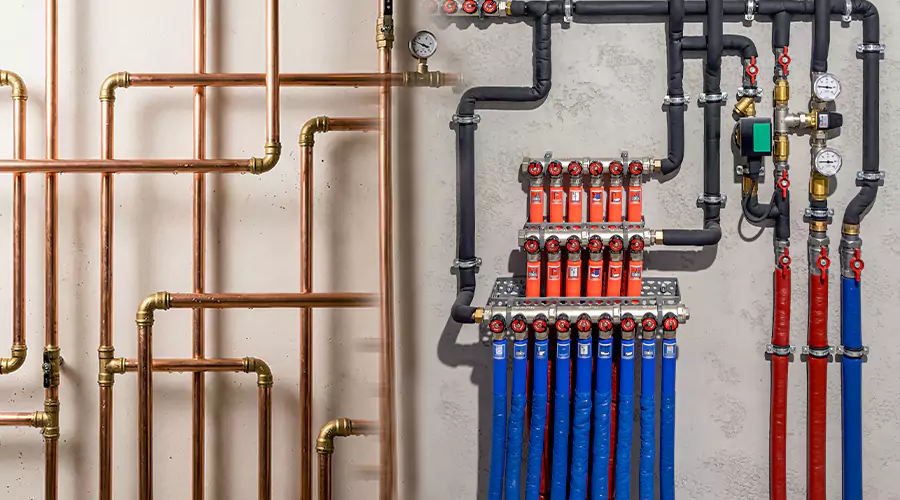
Replacing the pipes in your home is one of the most significant plumbing decisions you will ever make. Whether you are repiping an older property, building a new home, or dealing with a failed supply line, the choice between copper and PEX pipe comes up almost immediately.
Both materials have served American homeowners well for decades. Understanding the real differences between them helps you make a confident, informed decision that fits your home, your budget, and your long-term plans.
What Is Copper Pipe?
Copper pipe has been the standard material for residential plumbing in the United States since the 1960s. Valued for its durability, reliability, and long proven track record, copper remains one of the most widely used pipe materials in American homes today.
Three types of copper pipe appear most commonly in residential plumbing:
Type K is the thickest and most durable option, used primarily for underground water service lines and applications requiring maximum strength.
Type L is the most common choice for interior residential plumbing. Its moderate wall thickness balances durability with cost and handles typical household water pressure comfortably.
Type M has thinner walls and costs less than Type L. Many contractors use it for interior supply lines where pressure demands are not extreme.
Copper pipe connects using soldered joints, compression fittings, or press fittings depending on the application and installer preference.
What Is PEX Pipe?
PEX, which stands for cross-linked polyethylene, is a flexible plastic pipe that entered the American residential plumbing market in the 1980s and has grown rapidly in popularity ever since.
Available in red for hot water lines, blue for cold water lines, and white for either application, PEX pipe bends easily around corners and obstacles without requiring additional fittings at every turn.
Three varieties of PEX exist in the market:
PEX-A is the most flexible type and handles expansion and contraction most effectively. It costs more than the other varieties but offers the best freeze resistance of the three.
PEX-B is slightly stiffer than PEX-A and costs less. It remains the most widely used variety in residential construction across the United States.
PEX-C is the least flexible option and sees less common use in residential applications than the other two varieties.
PEX connects using crimp rings, clamp rings, or expansion fittings depending on the pipe variety and the installer's preferred method.
Copper vs PEX: A Direct Comparison
Cost
Starting with budget is practical for most homeowners planning a repiping project.
PEX pipe wins on cost. PEX material costs roughly one third to one quarter of what copper pipe costs per linear foot. For a full home repiping project, the material savings alone can amount to several thousand dollars depending on the size of the property.
Labor costs also favor PEX. The flexibility of PEX allows installers to run longer continuous lengths with fewer fittings and connections, which reduces installation time significantly compared to rigid copper that requires a fitting at every turn and junction.
Durability and Lifespan
Both materials offer impressive longevity when installed correctly and maintained properly.
Copper pipe carries an expected lifespan of 50 to 70 years under normal conditions. Its rigid structure resists physical damage well and maintains consistent performance throughout its service life in homes with good water quality.
PEX pipe carries manufacturer warranties of 25 years in most cases, though real-world performance suggests it lasts considerably longer when protected from UV exposure and installed within appropriate temperature ranges.
Homes with highly acidic water or aggressive water chemistry experience faster corrosion in copper pipes than in PEX, which resists chemical attack from water much more effectively.
Freeze Resistance
Living in a cold climate makes freeze resistance an important factor in pipe selection.
PEX pipe handles freezing conditions significantly better than copper. PEX expands when water inside it freezes and returns to its original shape as the ice thaws, reducing the risk of a burst pipe considerably compared to rigid materials.
Copper pipe does not expand. Water freezing inside a copper pipe creates internal pressure that the rigid walls cannot accommodate, and bursting becomes a real risk during sustained freezing temperatures.
PEX-A offers the highest freeze resistance of all PEX varieties and performs best in homes located in regions with harsh winter conditions.
Corrosion Resistance
PEX pipe resists corrosion completely. Being a plastic material, PEX does not react to the minerals, chemicals, or pH variations found in municipal and well water supplies. Scale does not build up on the inner walls of PEX pipe the way it does inside copper or galvanized steel.
Copper pipe can corrode under certain conditions. Highly acidic water with a pH below 7, high chlorine levels in municipal supplies, and certain soil conditions around underground copper lines all accelerate corrosion over time. Pinhole leaks that develop in copper pipes are often the direct result of long-term corrosion from water chemistry.
Heat Tolerance
Working with hot water lines requires pipe materials that handle elevated temperatures reliably.
Copper pipe excels at heat tolerance. It handles water temperatures up to 200 degrees Fahrenheit comfortably and performs reliably in high-temperature applications including boiler systems and radiant heating.
PEX pipe handles standard residential hot water temperatures well but has limitations at the upper end of the temperature range. Most PEX pipe carries a rating of 180 degrees Fahrenheit at standard residential pressures, which covers typical household hot water systems without difficulty.
Installation Ease
PEX pipe is significantly easier to install than copper. Its flexibility allows it to bend around framing, through walls, and along floor joists without additional fittings at every change of direction. Running a single continuous length of PEX from the supply manifold to a distant fixture reduces the number of connections in the system and lowers the risk of future leaks at joints, making PEX pipe installation a smart and efficient choice.
Copper installation requires more skill and specialized tools. Soldering copper joints demands proper technique, a torch, flux, and solder. Mistakes in soldered connections lead to leaks that require reheating and resealing to fix correctly. Press fitting systems eliminate the torch but require expensive specialized equipment.
Renovation projects in finished homes benefit greatly from PEX flexibility. Fishing flexible PEX tubing through walls and around obstacles causes far less disruption to finished surfaces than installing rigid copper requires.
Environmental Considerations
Copper is a natural material that is fully recyclable at the end of its service life. Mining and refining copper requires significant energy, but the material itself carries strong environmental credentials as a recyclable resource.
PEX is a plastic material derived from petroleum products and is not widely recyclable in most municipal programs. Its longer service life and lower manufacturing energy compared to copper partially offset the environmental concerns associated with plastic pipe materials.
Homeowners with strong environmental priorities weigh these factors differently depending on which aspect of sustainability matters most to their household.
UV Sensitivity
PEX pipe cannot be exposed to direct sunlight. UV radiation degrades the plastic over time and weakens the pipe structure. Any PEX used in outdoor applications or areas with sunlight exposure requires UV protective covering or sheathing.
Copper handles UV exposure without degradation. Outdoor applications, above-ground service lines, and areas with natural light exposure present no challenge to copper pipe performance.
Water Quality and Taste
Some homeowners report a slight plastic taste or odor in water from newly installed PEX systems. This effect typically disappears within a few weeks of regular use as the pipe fully flushes out.
Copper naturally inhibits bacterial growth due to its antimicrobial properties. Research supports copper's effectiveness at reducing certain bacteria in water supplies, which gives it a slight advantage in water quality over plastic alternatives in some studies.
Which Pipe Is Right for Your Home?
Choosing between copper and PEX depends on your specific situation rather than one material being universally superior to the other.
PEX makes the most sense when:
- Budget is a primary consideration and material cost savings matter
- The project involves retrofitting pipes through finished walls with minimal disruption
- The home sits in a cold climate where freeze resistance is a priority
- Water chemistry is aggressive or acidic and copper corrosion is a concern
- A full home repiping project requires minimizing both material and labor costs
Copper makes the most sense when:
- The home has excellent water quality and stable water chemistry
- High temperature applications like radiant heating or boiler systems are involved
- Outdoor or UV-exposed pipe runs require a material that handles sunlight without degradation
- Local building codes or homeowner association rules specify copper for the project
- Long-term resale value and buyer perception favor traditional materials in your market
Can You Use Both in the Same Home?
Many professional plumbers combine copper and PEX within the same plumbing system to take advantage of the strengths of each material. Using copper for short runs near the water heater where high heat tolerance matters and PEX for longer supply runs throughout the rest of the home is a practical and code-compliant approach in most jurisdictions.
Connecting copper and PEX requires dielectric fittings in certain applications to prevent galvanic corrosion at the junction between the two materials. A licensed plumber ensures these transitions are handled correctly and meet local code requirements.
What About Other Pipe Materials?
Homeowners sometimes encounter CPVC pipe, another plastic option that handles higher temperatures than standard PEX and costs less than copper. CPVC sees common use in hot water supply lines and remains a viable option in certain applications, though it is more brittle than PEX and more prone to cracking under impact.
Galvanized steel pipe appears in many older homes built before the 1960s. Its interior corrodes progressively over time, restricting water flow and eventually failing. Replacing galvanized steel with either copper or PEX during a repiping project eliminates ongoing corrosion problems permanently.
When to Call a Licensed Plumber?
Selecting the right pipe material is only the first step. Professional installation ensures the system performs reliably and meets all local building codes.
Reaching out to a licensed plumber makes sense when planning any repiping project regardless of material choice. A qualified plumber assesses your existing system, recommends the most appropriate material for your specific water quality and climate conditions, pulls the necessary permits, and installs the new pipes to code.
Attempting a full repiping project without professional experience risks improper connections, code violations, and future leaks that cost more to fix than hiring correctly from the start.
Summary
Both copper and PEX pipe deliver reliable, long-lasting performance in residential plumbing systems. Neither material is universally superior, and the right choice depends on your budget, climate, water quality, and the specific demands of your project.
PEX offers lower cost, easier installation, excellent freeze resistance, and strong corrosion resistance that makes it the practical choice for most modern repiping projects. Copper brings a proven 50-plus year track record, superior heat tolerance, natural antimicrobial properties, and full UV resistance that makes it the preferred material in specific high-demand applications.